
HYPERLIQUID: The Decentralized Exchange That Wants to Replace the Stock Market
Article 1 of 3 — The Hyperliquid Series

A Quick Word on DEXs
Decentralized exchanges (DEXs) are trading platforms that run entirely on a blockchain — no company in the middle, no custody of your funds, no permission required. The original DEXs were slow, expensive, and illiquid. Then came Hyperliquid, and the category changed completely.
It’s Sunday, 3am. Tesla Just Announced a Recall.
Elon posts. The news breaks. Every trading desk in the world will reprice TSLA when Monday opens, but that’s thirty hours away. You have a view. You have capital. And you have nowhere to act.
Or so you thought.
On trade[XYZ], TSLA never closes. Neither does NVDA, SP500, GOLD, or Brent crude. There’s no opening bell, no market hours, no broker clearing your account on Monday morning. You open a position at 3am on a Sunday, leveraged, with USD-settled P&L and a funding rate benchmarked to something that looks a lot like SOFR. Then you close it before anyone at Goldman has had their first coffee.
This isn’t a theoretical future. It’s running right now on a blockchain called Hyperliquid.
What Is Hyperliquid?
The simplest framing: Hyperliquid is a financial operating system built from scratch. Not a layer on top of an existing chain. Not a fork of something else. A purpose-built blockchain designed to run global financial markets — transparently, 24/7, without gatekeepers.
Electronic trading transformed markets in the 2000s. Speed improved, spreads tightened, execution became fairer. But the plumbing stayed the same: clearing houses, custodians, prime brokers, exchange memberships, regulatory jurisdictions. Hyperliquid’s bet is that those layers are not features, they are bureaucratic friction. And friction can be engineered away.
The technical numbers are not theoretical: Hyperliquid processes up to 200,000 transactions per second, with a median end-to-end order latency of 0.2 seconds. Every single trade is settled on-chain. Not batched, not optimistically assumed, not eventually reconciled. Every order, every fill, every margin update — publicly verifiable in real time.
{ For the Tradfi guys out there: “On-chain” means every action, every order placed, every trade matched, every margin update, is recorded as a permanent, immutable entry on a public ledger that anyone can read and verify in real time. There is no private server where the exchange keeps its own version of the truth. The ledger is the exchange!
The benefits are concrete: you cannot be front-run by the exchange itself, positions cannot be silently altered, and no one can claim a trade happened differently than it did.
When FTX collapsed, the first sign of fraud was a discrepancy between what the exchange showed users and what was actually in the books. On Hyperliquid, that gap is structurally impossible, the books are public and transparent.}
The economics are also live. Over $1 billion in annualized trading fees flow back into programmatic buybacks of HYPE, the network’s native token. HYPE secures the blockchain through staking, covers network costs, and provides fee discounts. Independent developers building on Hyperliquid’s infrastructure: mobile apps, trading terminals, custom interfaces etc.. they have generated over $65 million in revenue through a system called builder codes. No VC round funded any of this. No external capital. No insiders. Hyperliquid Labs built it, shipped it, and let the market decide.
What makes Hyperliquid structurally different from everything before it comes down to four things. First, transparency: every transaction is on a public ledger, verifiable by anyone, in real time. Second, open access: no one can be barred from using or building on the platform. Third, resilience: a permissionless, decentralized set of validators secures the network — there is no single point of failure or control. Fourth, performance: the throughput and latency are competitive with centralized exchanges, not with the slow, gas-expensive DEXs most people associate with crypto.
The deeper ambition is harder to articulate but worth stating plainly: Hyperliquid wants to be the credibly neutral infrastructure for global finance. The same way TCP/IP is neutral infrastructure for the internet, it does not care who uses it or for what, Hyperliquid is building a financial layer that does not discriminate, does not extract rent, and does not require trust in any intermediary.
Enter XYZ: TradFi Assets, On-Chain
Hyperliquid is the foundation. trade[XYZ] is what gets built on top of it.
To understand the relationship, you need to know about HIP-3 — Hyperliquid Improvement Proposal 3. It is the protocol primitive that makes everything in this article possible.
Before HIP-3, new perpetual markets on Hyperliquid were controlled by validators. Someone had to approve each new asset. The process was not entirely unlike getting a listing on a traditional exchange: there were gatekeepers. HIP-3 changed that. It made perpetual market creation permissionless. Any team that stakes 500,000 HYPE tokens can deploy their own perpetual DEX directly on HyperCore — Hyperliquid’s core execution layer — and define their own market listings, oracle sources, leverage limits, and risk parameters. If they behave maliciously, they lose their stake. The first three markets are free; additional ones require a Dutch auction. The incentive structure is elegant: open to everyone, economically accountable, manipulation-resistant.
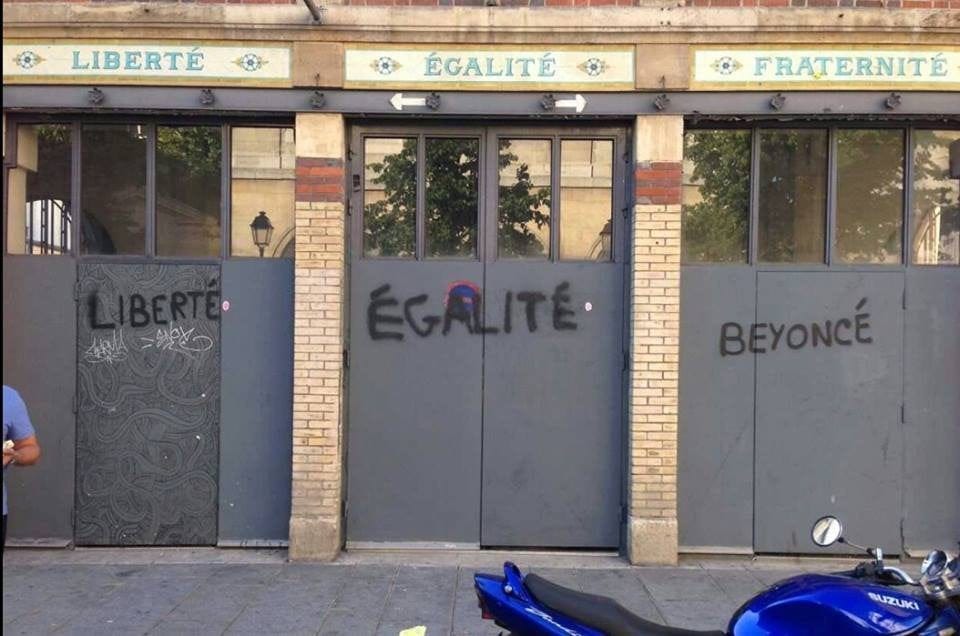
This sounds a little like this below, doesn't it? (LOL)
But getting back to the matter at hand, the XYZ protocol is a HIP-3 DEX. It is not a separate blockchain, not a wrapper or bridge, not a synthetic product dependent on some off-chain custodian. It is a deployment directly on Hyperliquid’s matching engine, inheriting its order types, liquidation mechanics, and settlement infrastructure, with one thing added: equity, commodity, FX, and index perpetuals.
The architecture has four layers, each with a distinct role:
HyperCore is the execution engine: the order book, the clearing, the margining, the matching. This is where trades happen. (We will explain this in the next article)
HIP-3 is the deployment primitive: it allows external teams to list their own perpetual markets on HyperCore with custom parameters, without permission.
The XYZ protocol is the HIP-3 deployment that defines which assets are listed, how their oracles work, what leverage is permitted, and how risk is managed.
trade[XYZ] is the trading interface — the website through which users access XYZ markets. It is not the only way to access them; anyone can build an alternative interface.
The critical insight: when you trade NVDA on trade[XYZ], your order is matched by Hyperliquid’s decentralized matching engine. There is no intermediary custodying your position. Settlement is on-chain, in USDC. The oracle tracking NVDA’s price is a system run by XYZ’s relayer, publishing price updates every 3 seconds, derived from institutional data providers and real-time market feeds.
How the Perps Actually Work
This is where it gets interesting and where TradFi people will notice that something genuinely new has been engineered here.
A perpetual futures contract is a derivative that tracks the price of an underlying asset and never expires. Unlike a CME futures contract, there is no delivery date, no roll, no physical settlement. You hold a position, you pay or receive a periodic funding rate to keep the contract anchored to spot price, and you close whenever you want. Hyperliquid’s crypto perps work this way. XYZ’s equity and commodity perps add one layer of complexity: the underlying market closes.
TSLA does not trade on Saturday. The NYSE closes at 4pm. Brent crude has maintenance windows. To run 24/7 perpetuals on these assets, XYZ had to solve a problem that TradFi never needed to solve, because TradFi never tried to run its markets around the clock: how do you price an asset when there is no external price?
The answer involves three distinct price concepts, each doing a different job.
The Oracle Price
The oracle price is the reference price used for funding and as a direct input to the mark price. Its key innovation is a dual-mode design.
When external markets are open, the XYZ relayer consumes price data from institutional liquidity providers and financial data sources. The externally derived fair price is published as the oracle price every ~3 seconds. Straightforward.
When external markets close — weekend, holiday, overnight — the oracle must continue to operate. It does this via a continuous-time exponentially weighted moving average (CTEWMA) of the order book’s own impact prices:
The impact price difference (IPD) is defined as:
where P_impactBid and P_impactAsk are the average execution prices to fill a defined impact notional on each side of the book. If a side has insufficient depth, its contribution is zero.
The oracle then updates as:
The time constant cap (c = 0.1) means no single update can move the oracle by more than ~9.5%. This makes the oracle robust to manipulation, to irregular updates, and to market halts. When external pricing resumes, the oracle immediately reverts to the externally derived price on the next tick.
For index products like SP500 and XYZ100, there is an additional layer. During the cash session, the oracle uses the spot index value directly. Outside the cash session, it uses futures prices discounted back to an implied spot value using an empirically estimated discount rate:
The discount rate d, which implicitly captures both the prevailing interest rate and the forward dividend yield, is tracked via its own CTEWMA (Continuous-Time Exponentially Weighted Moving Average) with a one-hour time constant. Each update is clamped at 0.01 basis points to prevent any single observation from distorting the rate.
This is not a simplified synthetic price. It is a principled continuous-time pricing methodology derived from market microstructure theory, applied to assets that close at 4pm and reopen 17 hours later.
The Mark Price
The mark price is what actually matters for your position. It is used for margin calculations, liquidation triggers, unrealized P&L, and stop/limit order triggers. It is computed as the median of three components:
The oracle price
The oracle price plus a 150-second CTEWMA of the basis (mid-price minus oracle price)
The current book mid-price
Why a median? It is manipulation-resistant. Moving the mark price requires simultaneously moving all three components in the same direction, pushing the oracle, the book mid, and the historical basis simultaneously. The median design means a single outlier cannot force a liquidation.
The Funding Rate
Funding is how perpetuals stay anchored to their underlying. Every hour, longs pay shorts (or vice versa) based on how far the perp price has drifted from the oracle. If the perp trades above the oracle, longs pay. If below, shorts pay. The mechanism is purely peer-to-peer — no fees are collected on these payments.
The XYZ funding formula is:
where:
P= Average Premium Index = impact_price_difference / oracle_pricer= Interest ratePayment = position_size × oracle_price × F
Cap: ±4% per hour
The 0.5 × multiplier is the deliberate design choice that separates XYZ from standard crypto perps. Hyperliquid’s baseline funding formula produces approximately 11% annualized at equilibrium. For a BTC perp, this is reasonable — it reflects the opportunity cost of crypto capital. For an equity perp, it is wrong. Tesla is not a DeFi yield asset. The relevant funding benchmark for equity perps is closer to SOFR plus 1-2%, which is roughly the carry cost of a levered equity position in traditional markets. The 0.5× multiplier targets approximately 5.5% annualized — calibrated to TradFi cost of carry, not crypto capital markets.
It also has a practical benefit: dampened funding during weekends and extended sessions, when liquidity is thinner and the oracle is running on internal pricing. A lower baseline means weekend traders are not slowly bled by funding while waiting for markets to reopen.
Discovery Bounds: The Problem TradFi Never Had to Solve
This is the most original piece of engineering in the XYZ system and it is a direct consequence of running 24/7 markets on assets that close five days a week.
When external markets close, the internal oracle takes over. But now you have a problem: nothing is anchoring the price to reality. A coordinated trader could push the mark price aggressively in one direction, triggering liquidations that no external market would ever have caused. The price “discovery” would not reflect genuine information, it would reflect manipulation.
Discovery bounds solve this by restricting how far the mark price can move during internal pricing sessions.
The rule is simple: during internal sessions, the mark price cannot move more than ±(1/max_leverage) from a reference price. For a market with 20x max leverage, the instantaneous bound is ±5%. For 50x leverage (SP500), it is ±2%.
The reference price starts as the last externally derived oracle price, for example, Friday’s closing price.
But markets do move over weekends. Real news happens. So XYZ implements a ratcheting mechanism called re-anchoring. When the oracle price approaches the edge of the current bound (at 90% of the distance, for most markets), the reference price re-anchors to the current bound and a fresh ±5% window opens from there. Each market has a configured number of re-anchors per direction, think of them as “free moves” the market gets before hitting a hard cap.
For WTIOIL (WTI crude, 20x leverage, 2 resets per direction):
Level Reference Lower Bound Upper Bound Upper Trigger 0 $100.00 $95.00 $105.00 $104.50 1 $105.00 $99.75 $110.25 $109.73 2 (hard cap) $110.25 $104.74 $115.76 —
With 2 resets, the maximum upward move from a $100 close is:
$100 × 1.05³ ≈ $115.76  (+15.76%)
Maximum downside: $100 × 0.95³ ≈ $85.74  (−14.26%)
Crucially: if a trader’s liquidation price lies outside the active discovery bounds, that position cannot be liquidated while the bounds are in effect. The system will not force a liquidation based on a price that cannot yet be reached. This is a deliberate protection against the worst-case scenario of extended session volatility wiping out legitimate positions.
When external pricing resumes, the reference price reverts to the live externally derived oracle and all reset counters return to zero.
The Asset Universe
This is where the scale of the project becomes clear. The following are all available as USDC-margined perpetuals, tradable 24/7 (subject to discovery bounds during off-hours):
Equity Indices
SP500 — tracks 500 large-cap US stocks, 50x leverage, ±2% discovery bound, cross margin
XYZ100 — Nasdaq-100 equivalent, 30x leverage, ±3.5% bound, cross margin
Individual Stocks — a partial list:
NVDA (20x), AAPL (20x), TSLA (10x), META (10x), MSFT (10x), AMZN (10x), GOOGL (10x), AMD (10x), COIN (10x), HOOD (10x), MSTR (10x), CRWV (10x — CoreWeave), CBRS (10x — Cerebras, pre-IPO style)
Commodities
GOLD (25x), SILVER (25x), BRENTOIL (20x), WTIOIL (20x), NATGAS (10x), COPPER (20x), PLATINUM (20x), PALLADIUM (20x)
FX
JPY, EUR, GBP — all at 50x leverage, ±2% discovery bound, trading nearly 24/5
Quanto Exotics
JP225 — Japan’s Nikkei 225, denominated in JPY, P&L cash-settled in USDC (a quanto derivative)
KR200 — Korea’s KOSPI 200, denominated in KRW, cash-settled in USDC
Pre-IPO Perpetuals (IPOPs)
CBRS (Cerebras Systems), with no external price at launch — the initial reference price is set by XYZ, and discovery bounds provide the price formation mechanism
Why trade these here instead of a TradFi exchange?
A few reasons that compound on each other. First, hours: XYZ never closes. NVDA trades all weekend. News does not wait for Monday. Second, access: no broker account, no country restrictions, no account minimums beyond what you deposit in USDC. Third, leverage: 20x on NVDA, 50x on SP500, available immediately with no margin call phone calls. Fourth, pre-IPO access: CBRS and other IPOPs offer exposure to companies before they list — a category that has historically been exclusive to institutional investors and insiders. Fifth, quanto plays: JP225 and KR200 let you take a directional view on Japanese and Korean equity markets without holding JPY or KRW, with P&L settled in USDC. The FX exposure is removed; the equity beta is not.
Do You Actually Own the Shares?
No. And this is important to understand clearly.
When you trade NVDA on trade[XYZ], you are trading a perpetual futures contract whose price tracks NVDA. You have no shareholder rights, no voting rights, no dividend entitlement, and no claim on the underlying company. You have a derivatives position. Your P&L is determined entirely by the price movement of the contract relative to your entry.
For commodities like WTIOIL and BRENTOIL, there is an equally important clarification: you will never receive a barrel of oil. These are cash-settled perpetuals — there is no delivery mechanism, no expiry, no physical settlement. The CME WTI contract that expired negative in April 2020 did so partly because some holders faced actual physical delivery obligations they could not meet. That cannot happen here. The worst case is that your position is liquidated. The oil stays in Texas.
For equity indices, the same logic applies. Trading SP500 perps on XYZ does not replicate owning an S&P 500 ETF. No dividends accrue. No rebalancing happens on your behalf. You are trading the index level as a derivative.
This is not a deficiency — it is the nature of derivatives. The product is price exposure, not ownership. Most traders using leverage do not want physical delivery of West Texas Intermediate. They want the P&L.
Risk and Margining
XYZ perps are USDC-margined linear contracts. Everything — collateral, settlement, P&L — is denominated in USDC. There is no crypto collateral, no Bitcoin margin, no token price risk in your account balance beyond the positions you choose to take.
Isolated vs. Cross Margin
Currently, all XYZ perps operate in isolated margin mode, with cross margin available on select assets (SP500, XYZ100, NVDA, AAPL, GOLD, SILVER, META, MSFT, AMZN, MU, TSLA).
In isolated margin, the margin you allocate to a position is ring-fenced. If NVDA moves against you and your isolated position is liquidated, your other positions are unaffected. Maximum loss on that position is your allocated margin.
In cross margin, your entire account balance backs all positions simultaneously. This is capital-efficient — you need less total margin — but it means a loss in one market can erode the margin supporting other markets.
Liquidation Mechanics
A liquidation is triggered when account equity drops below the maintenance margin threshold. The system first attempts to close the position via market orders on the book. If the account drops below two-thirds of maintenance margin without successful liquidation, a backstop liquidation occurs through the liquidator vault. For cross-margin-enabled assets, an on-chain backstop liquidator is live, absorbing undercollateralized positions automatically without creating bad debt.
The precise liquidation price formula is:
where l = 1 / MAINTENANCE_LEVERAGE and side is +1 for long, −1 for short.
For assets with margin tiers, the maintenance leverage depends on position value at the liquidation price — larger positions have higher maintenance margin requirements.
One critical protection: if your liquidation price lies outside the active discovery bounds during an extended session, you cannot be liquidated until the bounds move or external pricing resumes. The system will not force you out of a position based on a price that is mechanically unreachable while bounds are in effect.
Auto-Deleveraging (ADL)
If the liquidation system cannot close a position and the backstop vault is insufficient, auto-deleveraging kicks in. The most profitable traders on the opposing side of the market have their positions partially reduced to absorb the loss. ADL is a last resort, inherited directly from HyperCore. The on-chain backstop liquidator for cross-margin assets is specifically designed to minimize ADL events during high-volatility periods.
Fees
XYZ perpetuals carry fees at twice the standard rate of Hyperliquid’s validator-operated markets. This is a direct consequence of the HIP-3 structure: standard HIP-3 fees are 2× baseline, split 50/50 between Hyperliquid and trade[XYZ]. Both sides of the infrastructure get compensated.
For context, Hyperliquid’s base fees are already very competitive with centralized exchanges. The 2× HIP-3 rate is still well below what most retail traders pay through their brokers once spread, commission, and financing costs are included.
A Growth Mode option exists for certain assets — reduced fees during launch phases to bootstrap liquidity and open interest.
This Is What TradFi Looks Like When You Rebuild It From Scratch
Everything described in this article exists today. It is not a whitepaper. It is not a roadmap item. It is live, on-chain, auditable, and processing real volume.
The deeper point is not that you can now trade NVDA on a blockchain. The deeper point is the set of problems that had to be solved to make that possible, dual-mode oracle pricing, the CTEWMA internal price mechanism, the 0.5× funding multiplier calibrated to SOFR, the discovery bounds ratcheting system, the on-chain backstop liquidator. Each of these is a genuine piece of market microstructure engineering that did not exist before XYZ needed it.
TradFi has not solved these problems because TradFi never needed to. NYSE closes at 4pm because NYSE has always closed at 4pm. CME clears at settlement because that is how CME was designed. These are not natural laws, they are institutional path dependencies. And when you are building from a blank slate, path dependencies disappear.
What you are left with is a matching engine that runs on no one’s server, a price oracle that never sleeps, a funding rate calibrated to the real cost of capital, and a liquidation system that protects you even when external markets go dark.
That is not a crypto product wearing a TradFi costume. That is a new market structure.
In the next article, we go one layer deeper, into HyperCore itself: the consensus algorithm, the on-chain order book, the oracle network, the bridge architecture, and the staking mechanics that make all of this possible.
Part of a three-part series on Hyperliquid.
Next: HyperCore — The Matching Engine the World Didn’t Know It Needed.